Discover the legacy of Kerala’s ancient maritime trade through archaeological sites, historic synagogues, traditional palaces and colonial forts across the Muziris region.
Long before modern shipping connected countries across the world, Kerala’s coastline was an important centre of international trade. Ships carrying merchants from distant lands arrived along the Malabar Coast, bringing goods, ideas and cultural influences. Among the most significant trading centres of this period was Muziris, an ancient port associated with the region around present-day Kodungallur.
Known for its connections with the spice trade, Muziris developed into an important meeting point for merchants from the Mediterranean, West Asia and other parts of the Indian Ocean world. Pepper was one of its most valuable exports, while beads, pottery and other goods formed part of the wider trading network.
Although the ancient port itself has not been conclusively identified, the surrounding region preserves several places connected with Kerala’s maritime, religious and political history. From archaeological discoveries at Pattanam to the historic neighbourhoods of North Paravur and Chendamangalam, the Muziris Heritage Trail offers an opportunity to explore different periods of Kerala’s past.
The History of Ancient Muziris
Muziris was an important trading centre on Kerala’s western coast during the early historic period. Its name appears in ancient accounts of overseas commerce, particularly those describing the trade between South India and the Mediterranean world.
The region was closely associated with the early Chera kingdom, whose rulers played an important role in the political and commercial history of ancient Kerala. Its coastal location and network of rivers and waterways helped connect inland settlements with overseas trading routes.
Pepper was among the most sought-after commodities exported from this region. Traders also exchanged precious stones, beads, textiles and other goods. These commercial connections brought people from different parts of the world to Kerala, contributing to the development of diverse cultural and religious communities along the coast.
The exact location of ancient Muziris remains a subject of historical and archaeological research. However, discoveries across the wider region provide valuable evidence of its importance as part of Kerala’s early maritime trading network.
Pattanam: Exploring the Archaeological Remains of an Ancient Trading Settlement
Pattanam, in Ernakulam district, is one of the most significant archaeological locations associated with the study of ancient Muziris.
Archaeological excavations at the site began in 2007, revealing evidence of an early historic settlement with connections to overseas trade. Discoveries include brick structures, ring wells, pottery, storage jars, beads and other objects that offer insights into the lives of people who lived in the region centuries ago.
Among the notable finds are fragments of Roman amphorae and pottery associated with West Asian trading networks. These objects provide evidence of commercial connections between the Malabar Coast and distant regions.
Excavations have also revealed a wharf-like structure with bollards and a wooden canoe, suggesting the importance of waterways in transportation and trade.
The settlement evidence dates broadly from around the 2nd century BCE to the 10th century CE. Although Pattanam is widely studied as a leading candidate for the location of ancient Muziris, its exact identification with the historic port remains a subject of research.
For visitors interested in archaeology, Pattanam offers a fascinating introduction to Kerala’s early international connections.
Paravur Synagogue: Discovering Kerala's Jewish Heritage
North Paravur preserves an important part of Kerala’s Jewish history through the historic Paravur Synagogue.
The synagogue reflects the presence of Jewish communities that developed along Kerala’s coast through centuries of trade and migration. Jewish merchants were part of the region’s wider commercial networks, and their settlements contributed to the cultural diversity of the coastal towns.
The building combines Jewish religious traditions with elements of traditional Kerala architecture. Its entrance structure, wooden features and interior arrangement reflect the way local architectural practices and community traditions came together.
The surrounding Jew Street was historically associated with the Jewish settlement. Walking through this area helps visitors understand how religious, residential and commercial life developed around the synagogue.
Today, the restored building serves as a museum, preserving objects and features connected with the history of Kerala’s Jewish community.
Chendamangalam: A Place Where Different Communities Meet
Chendamangalam is one of the most distinctive heritage locations in the Muziris region. Its history reflects the presence of different religious communities within the same historic settlement.
The Kottayil Kovilakom area is particularly notable for the proximity of a synagogue, church, mosque and temple. These places of worship represent different communities that have been part of the region’s social and cultural history.
Chendamangalam is also associated with the Paliam family, which held an influential position in the former Cochin kingdom. The family’s political connections and historic residences form another important part of the area’s heritage.
Rather than representing a single period or community, Chendamangalam brings together several layers of Kerala’s history within one location.
Paliam Palace and Nalukettu: A Glimpse into Traditional Kerala Architecture
Paliam Palace in Chendamangalam was associated with the Paliath Achans, who served as hereditary prime ministers of the Cochin kingdom. The family held considerable influence in the region’s political and administrative affairs.
The palace reflects traditional Kerala architectural features, including wooden elements, detailed craftsmanship and spaces arranged around the needs of an influential household.
Another important part of the Paliam heritage is the Nalukettu. A nalukettu is a traditional Kerala residential building organised around a central open courtyard, with rooms arranged along its four sides.
The courtyard allows natural light and ventilation into the house while forming the centre of family activities. This architectural arrangement reflects how traditional Kerala homes were designed in response to the climate and everyday lifestyle.
Together, Paliam Palace and the Nalukettu offer an insight into the relationship between architecture, family traditions and political history in the former Cochin kingdom.
Kottappuram Fort: Tracing Portuguese and Dutch History
Kottappuram Fort, also known as Cranganore Fort, represents a later chapter in the history of Kerala’s coastal trade.
The Portuguese constructed the fort in 1523 near Kodungallur, at a strategically important location close to the Periyar River. Its position helped them monitor maritime movement and strengthen their influence over the coastal trading routes.
The Dutch captured the fort in 1663 as European powers competed for control over trade along the Malabar Coast. The fort subsequently underwent changes under different periods of control, and much of its original structure no longer survives.
Today, the remaining fort walls and ruins offer a glimpse into the colonial period, when European trading powers established military positions along Kerala’s coastline.
Its history also shows how the importance of the region continued beyond the ancient spice trade era.
Pallippuram Fort: A Portuguese Landmark on Vypin Island
Located on Vypin Island, Pallippuram Fort is another important monument connected with the European presence along Kerala’s coast.
Built by the Portuguese in 1503, it is recognised as one of the oldest surviving European-built forts in India. The structure has a distinctive hexagonal design, with laterite stone forming an important part of its construction.
Its location made it useful for observing and protecting coastal routes during a period when maritime trade was closely linked with European political and commercial interests.
The fort later came under Dutch control, reflecting the changing balance of power along the Malabar Coast.
Although the surviving structure represents only part of its original form, Pallippuram Fort remains an important reminder of the Portuguese and Dutch periods in Kerala’s history.
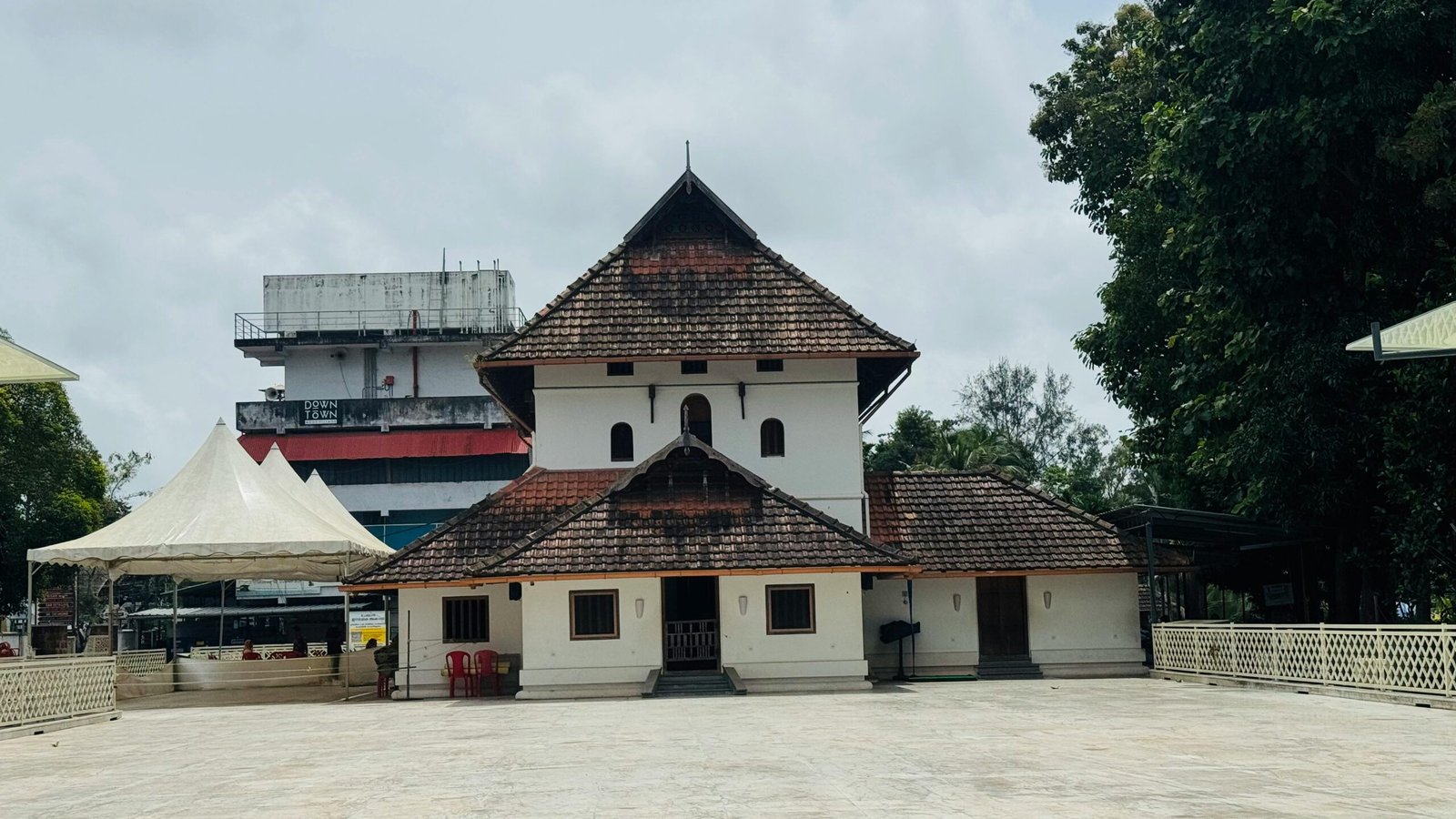
Cheraman Juma Masjid: An Important Landmark in Kerala's Islamic Heritage
Cheraman Juma Masjid in Kodungallur holds a special place in Kerala’s religious and cultural history. It is traditionally associated with the early arrival of Islam on the Malabar Coast.
According to a popular local tradition, the mosque was established following the story of Cheraman Perumal, a ruler of Kerala who is said to have travelled to Arabia and embraced Islam. The historical details of this account are debated, but the story remains an important part of the region’s cultural memory.
The mosque has undergone several renovations and architectural changes over the centuries. Its history reflects the longstanding connections between Kerala’s coastal communities and the Arab world through trade, travel and religious exchange.
For visitors exploring Kodungallur, the mosque offers an opportunity to understand an important aspect of Kerala’s Muslim heritage.
Cheraman Parambu: Exploring the Legacy of the Chera Perumals
Cheraman Parambu in Kodungallur is associated with the political history of the later Chera Perumal rulers.
The wider region was connected with Mahodayapuram, an important capital during the later Chera period. Archaeological explorations at Cheraman Parambu have uncovered laterite foundations, pottery fragments, metal objects, and other remains indicating earlier occupation.
Although the site’s precise function is not conclusively established, its historical association makes it an interesting place to understand the political landscape of medieval Kerala.
Unlike a preserved palace or fort, Cheraman Parambu is primarily significant for the historical questions raised by its archaeological remains.
Exploring the Muziris Heritage Region
The Muziris Heritage Trail is not limited to one ancient port or a single archaeological site. It covers a wider landscape of historic settlements and monuments across parts of Ernakulam and Thrissur districts.
The locations can be understood through a few geographical clusters:
- North Paravur: Paravur Synagogue and its historic Jewish neighbourhood.
- Chendamangalam: Kottayil Kovilakom area, historic religious landmarks and Paliam heritage buildings.
- Pattanam: Archaeological remains associated with the study of ancient Muziris.
- Kodungallur: Cheraman Juma Masjid, Cheraman Parambu and Kottappuram Fort.
- Vypin Island: Pallippuram Fort and its Portuguese colonial history.
These places represent different historical periods, from early maritime trade to medieval religious and political developments and European colonial expansion. Exploring them together helps visitors understand how Kerala’s coastal communities and trading settlements changed over time.
Discover the Many Layers of Kerala's History
The Muziris Heritage Trail brings together different chapters of Kerala’s past in one historical landscape. Pattanam provides archaeological evidence of early overseas trade, while the synagogues and religious landmarks reveal the presence of diverse communities. Traditional residences, palaces and colonial forts tell stories of changing political influence and architectural traditions.
What makes this region particularly interesting is that its heritage is spread across living settlements, historic neighbourhoods and archaeological locations rather than preserved in a single monument.
For travellers interested in history, architecture and culture, exploring Muziris offers a deeper understanding of Kerala’s maritime connections and the communities that helped shape its coastal identity.