
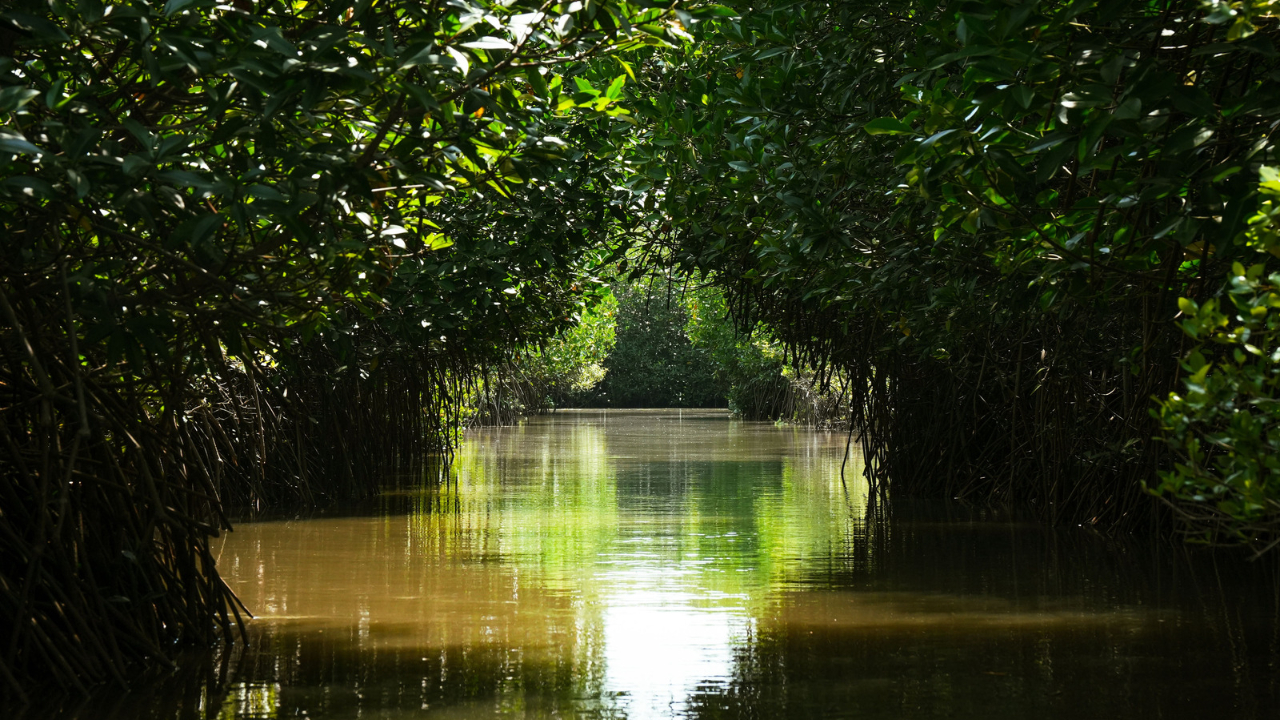
Along Kerala’s coastline, where rivers meet the Arabian Sea, stretches of green vegetation grow through muddy banks and winding waterways. These are the state’s mangrove forests, distinctive natural landscapes that support wildlife, protect coastal areas and remain closely connected to the lives of fishing communities.
While Kerala is widely known for its beaches, backwaters and hill stations, its mangrove landscapes reveal another side of the state’s natural beauty. From the waterways of Kannur to the island communities around Kadamakkudy, these coastal ecosystems offer travellers an opportunity to discover Kerala beyond its familiar tourist attractions.
Discovering Kerala's Mangrove Landscapes
Mangroves are salt-tolerant trees and shrubs that grow along sheltered coastlines, estuaries and tidal waterways. They thrive in muddy, waterlogged environments where freshwater from rivers mixes with seawater.
Kerala’s coastline provides suitable conditions for these forests. Its network of rivers, lagoons and backwaters creates habitats where mangrove vegetation can develop. Their exposed and tangled root systems are among their most distinctive features, allowing the plants to remain stable in soft mud while obtaining oxygen in waterlogged soil.
Unlike an ordinary forest, a mangrove landscape changes with the tides. Water levels rise and fall around the roots, small waterways move through the vegetation, and the surrounding environment supports a variety of aquatic and birdlife.
Kannur: Exploring the Mangrove Waterways of Northern Kerala
Kannur is one of Kerala’s important regions for mangrove ecosystems. Its rivers, estuaries and coastal wetlands create a landscape where mangrove vegetation grows alongside fishing settlements and traditional waterways.
The areas around Valapattanam and nearby river systems are associated with mangrove habitats. Here, the natural environment reflects the close relationship between coastal communities and the water. Fishing activity, changing tides and the movement of boats are all part of the wider landscape.
For travellers interested in nature and local life, Kannur’s mangrove surroundings offer a different perspective on northern Kerala. Rather than focusing only on beaches and historic attractions, visitors can appreciate the ecological importance of the waterways that support the region’s coastal communities.
Kadamakkudy: Island Life Amid Kochi's Backwaters

Away from the busy streets of Kochi, Kadamakkudy presents a quieter landscape of islands, canals, paddy fields and backwater surroundings. Located within the wider Kochi region, this group of islands is closely associated with fishing communities and traditional village life.
Mangrove vegetation forms part of the surrounding wetland environment. The waterways connect different parts of the island landscape, while fishing activity remains an important part of everyday life.
Exploring Kadamakkudy offers a chance to see how people live alongside Kerala’s backwaters. Its natural surroundings, small settlements and water-based livelihoods make it an interesting destination for travellers looking to understand the relationship between local communities and coastal ecosystems.
Kochi's Coastal Wetlands and Mangrove Patches
Beyond Kadamakkudy, mangrove patches can also be found around parts of Vypin and other coastal wetlands in the Ernakulam district. These areas form part of the wider backwater ecosystem surrounding Kochi.
The presence of mangroves alongside settlements, waterways and fishing areas shows how natural habitats exist within an increasingly developed coastal landscape. They provide shelter for aquatic organisms and contribute to the ecological balance of the backwaters.
These wetland areas also highlight the importance of preserving natural spaces around urban and coastal communities. Even relatively small mangrove patches can play a valuable role in supporting local biodiversity.
Wildlife: The Natural Residents of Mangrove Forests
One of the most interesting aspects of mangrove landscapes is the variety of life they support. Their tangled roots, shallow waters and muddy banks create habitats for many aquatic creatures and birds.
Small fish, prawns and crabs use the spaces between mangrove roots for shelter and feeding. These protected areas can also serve as important nursery habitats for young aquatic animals.
Birdlife adds another dimension to these wetlands. Depending on the location and season, visitors may spot kingfishers, herons, egrets and other waterbirds searching for food along the waterways. Mudskippers and fiddler crabs are also associated with suitable mangrove habitats.
For nature enthusiasts, observing these small details can make a visit more rewarding. A mangrove forest is not simply a stretch of coastal vegetation; it is a living environment where different species depend on one another.
Why Mangroves Are Important to Kerala's Coastline
Beyond their natural appearance, mangrove forests perform several important environmental functions. Their dense root systems help hold muddy soil together, trap sediment and reduce erosion along sheltered shorelines.
They can also reduce the impact of waves and tidal currents in suitable coastal settings. This makes them valuable natural features in regions exposed to changing water levels and coastal erosion.
Mangroves are also recognised for their ability to store carbon. Carbon is held in their vegetation and, particularly, in the waterlogged soils beneath them. This makes mangrove conservation important not only for coastal biodiversity but also for wider environmental protection.
The Connection Between Mangroves and Coastal Communities
The story of Kerala’s mangroves is closely connected to the people who live around them. Fishing communities depend on the wider coastal and backwater ecosystems for their livelihoods, and healthy mangrove habitats support fish, prawns and crabs.
The waterways surrounding these forests are also part of everyday village life. Boats, fishing nets, changing tides and traditional knowledge of local waters all contribute to the character of these coastal settlements.
This relationship makes mangrove conservation especially important. Protecting the natural environment also helps preserve the resources and livelihoods connected to it.
The Challenges Facing Kerala's Mangrove Forests
Despite their ecological value, Kerala’s mangrove ecosystems face several challenges. Land reclamation, construction, pollution and changes to natural waterways can reduce the space available for mangrove growth.
Waste disposal and the disturbance of tidal channels can also affect the health of these wetlands. When mangrove vegetation disappears, the wildlife and aquatic habitats that depend on it may also be affected.
Conserving existing mangrove forests and restoring damaged areas are important steps towards protecting Kerala’s coastal environment. Local communities also have an important role in these efforts because of their close relationship with the surrounding waterways.
Exploring Kerala's Mangroves Responsibly
Mangrove landscapes offer a different kind of travel experience from Kerala’s popular beaches and backwater cruises. They allow visitors to observe coastal vegetation, tidal waterways and the everyday activities of nearby communities.
Where guided visits or boat experiences are available, travellers can learn more about the local ecosystem and its importance. However, not every mangrove area is open to tourism, and some locations are environmentally sensitive.
Visitors should follow local access rules, avoid littering, and avoid disturbing wildlife or damaging mangrove roots. Choosing responsible local operators where available can also help support communities connected to these landscapes.
Discovering a Different Side of Kerala
Kerala’s mangrove forests reveal a part of the state that often receives less attention than its beaches, hill stations and backwaters. Their importance lies not only in their natural surroundings but also in the wildlife they support, the coastlines they help protect and the communities whose lives are connected to them.
From Kannur’s river systems to the island waterways of Kadamakkudy, these landscapes show how closely Kerala’s coastal environment and local life are connected.
For travellers interested in nature, village experiences and the quieter corners of the state, exploring mangrove landscapes offers a meaningful way to understand Kerala. They remind us that some of the most valuable travel experiences come from discovering the natural environments that quietly sustain a place.


