
Kerala is celebrated for its tranquil backwaters, misty hill stations, and palm-fringed beaches, but the state’s greatest treasure lies in its vibrant cultural heritage. Across temples, village squares, churches, mosques, sacred groves, and festival grounds, centuries-old folk art forms continue to preserve Kerala’s history, beliefs, music, dance, and storytelling traditions.
Unlike classical art forms such as Kathakali, Mohiniyattam, and Koodiyattam, which evolved under royal patronage and formal training, Kerala’s folk arts were born from the lives of ordinary people. They reflect the customs of farming communities, fishermen, tribal groups, religious institutions, and local festivals. Many of these performances are still presented as acts of devotion rather than stage entertainment, making them an authentic expression of Kerala’s living culture.
Whether you’re exploring the temple festivals of North Kerala, celebrating Onam in Thrissur, or visiting a cultural centre in Fort Kochi, witnessing Kerala’s folk art forms offers an unforgettable journey into the traditions that have shaped the state for centuries.
What Are Folk Art Forms?
Folk art forms are traditional performances developed and preserved by local communities through generations. They are closely connected with festivals, agriculture, mythology, religion, weddings, and everyday village life.
These performances combine storytelling, music, dance, percussion, costumes, masks, rituals, and community participation. Unlike classical performances that are usually staged in auditoriums, many folk arts continue to be performed in temples, village courtyards, and open public spaces.
Theyyam – Kerala's Sacred Living Tradition

Although Theyyam is widely known as one of Kerala’s most famous folk performances, it is more accurately classified as a ritual art because of its deep connection with worship and temple traditions.
Practised mainly in Kannur and Kasaragod, Theyyam transforms performers into living manifestations of local deities through elaborate costumes, towering headgear, vibrant face painting, fire rituals, and rhythmic percussion.
For devotees, Theyyam is not merely a performance but a sacred ceremony where the performer is believed to embody the deity.
Popular Forms
- Pottan Theyyam
- Muchilot Bhagavathi Theyyam
- Kandanar Kelan Theyyam
Where to Experience
- Kannur
- Kasaragod
- Sacred Groves (Kavus)
- Temple festivals from mid-November to mid-May, which mark the traditional Theyyam season in North Kerala.
Pulikali – The Famous Tiger Dance

Pulikali, meaning “Tiger Dance,” is one of the most colourful highlights of Kerala’s Onam celebrations.
Artists paint their bodies with vibrant tiger patterns before dancing through the streets to the rhythm of traditional percussion instruments such as the Chenda and Thakil.
The performance is traditionally held on Naalam Onam (the fourth day of the Onam festival) in Thrissur, where thousands of spectators gather every year to witness this energetic celebration.
Best Place to Watch
- Thrissur during Onam Season
Margamkali – The Heritage Dance of Kerala's Christians
Margamkali is a traditional dance performed by the Saint Thomas Christian community.
Dancers move rhythmically around a ceremonial oil lamp while singing songs that narrate the arrival of St. Thomas the Apostle and the growth of Christianity in Kerala.
Today, Margamkali remains an important part of church festivals and cultural events across Central Kerala.
Duffmuttu – Music, Rhythm and Celebration
Duffmuttu combines devotional songs, rhythmic movements, and synchronized percussion using the Duff, a circular frame drum.
It is commonly performed during weddings, religious gatherings, and festivals throughout northern Kerala, especially in Kozhikode, Malappuram, and Kannur.
Oppana – A Joyful Wedding Tradition

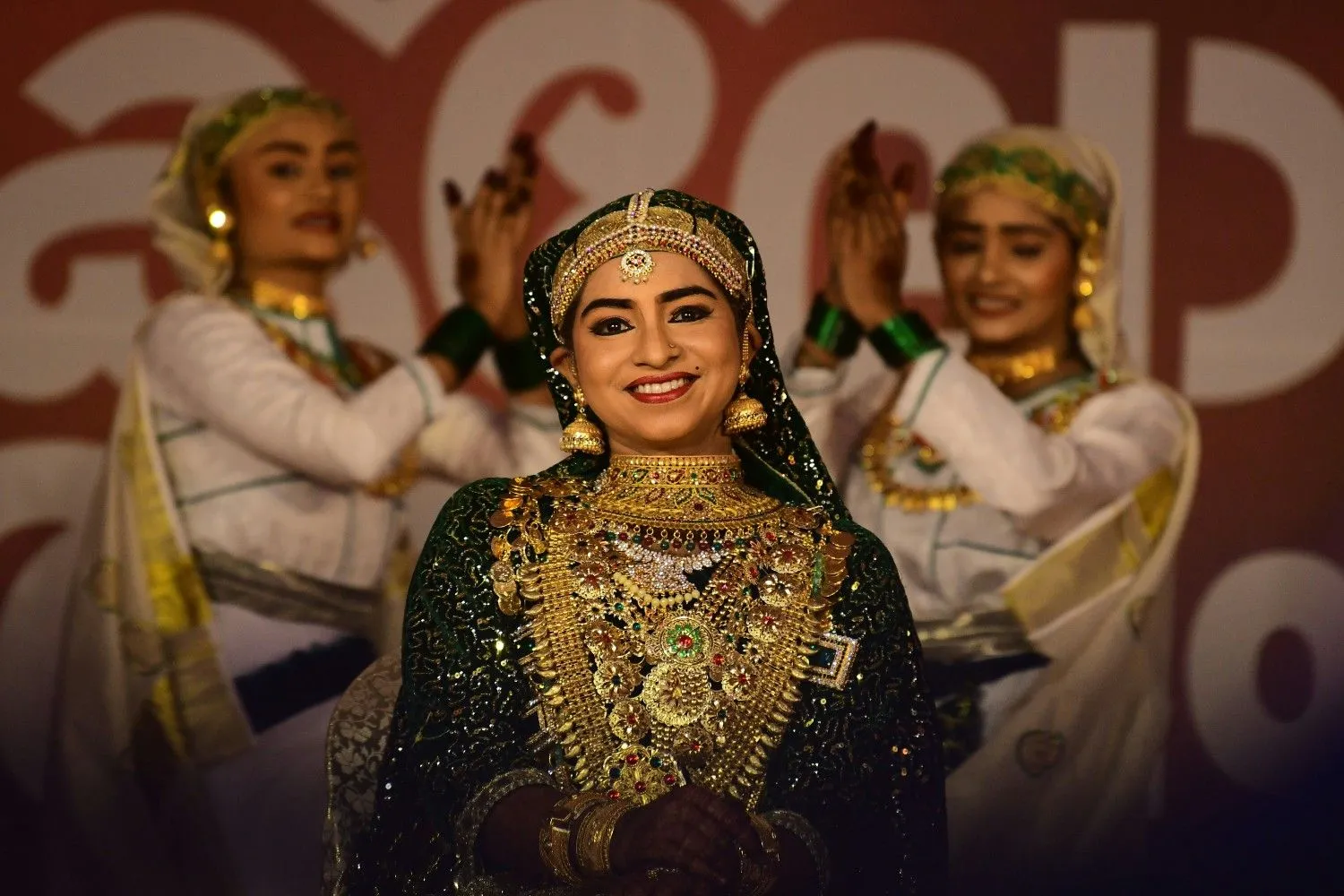
Oppana is one of Kerala’s most graceful Muslim folk dances, especially popular in Kozhikode, Malappuram, Kannur, and other parts of the Malabar region.
Performed during wedding celebrations, women gather around the bride, singing traditional Mappila songs while clapping rhythmically and dancing gracefully. In some communities, men also perform Oppana during wedding festivities.
The dance beautifully reflects joy, family bonding, and the rich cultural traditions of Kerala’s Muslim community.
Kolkali – Kerala's Traditional Stick Dance
Kolkali is a lively folk dance where groups of performers rhythmically strike wooden sticks while moving in carefully coordinated circular formations.
Believed to have evolved from martial training traditions, Kolkali is performed by both Hindu and Muslim communities, particularly in the Malabar region. While the core movements are similar, Muslim communities in some regions perform a closely related variation known as Aravana Muttu, which features its own distinctive musical rhythms and performance style.
Its fast rhythm, teamwork, and synchronized movements make it one of Kerala’s most entertaining folk performances.
Thiruvathirakali and Kaikottikali
Although the names are often used interchangeably, there is a subtle distinction between these traditional women’s dances.
Kaikottikali is the broader term for Kerala’s graceful clap dance performed during festivals and celebrations, including Onam.
Thiruvathirakali refers specifically to the devotional version performed during the Thiruvathira festival in the Malayalam month of Dhanu (December–January), when women dance around a traditional lamp while singing songs dedicated to Lord Shiva.
Padayani – The Festival of Giant Masks
Padayani is a spectacular ritual performance performed exclusively in Bhadrakali temples, primarily in the districts of Pathanamthitta and Kottayam.
Artists wear enormous handcrafted masks made from areca palm leaves and perform energetic dances accompanied by traditional percussion and devotional songs.
Although often grouped with folk arts, Padayani is fundamentally a ritual offering connected with temple worship and is generally performed during the temple festival season between December and May.
Kummattikali – Kerala's Colourful Mask Dance
Kummattikali is one of the oldest folk dances associated with the Onam festival.
Artists wear beautifully carved wooden masks representing mythological characters and roam through villages, entertaining children and families.
The colourful costumes and lively performances make Kummattikali one of the highlights of Onam celebrations in Thrissur and Palakkad.
Velakali – A Martial Temple Performance
Velakali combines martial movements with ritual dance and depicts battle scenes from the Mahabharata.
It is traditionally performed at the Sree Padmanabhaswamy Temple in Thiruvananthapuram during temple festivals using swords, shields, and rhythmic choreography.
Chavittunadakam – Kerala's Christian Folk Theatre
Introduced during the Portuguese colonial period, Chavittunadakam blends European theatrical traditions with Kerala’s storytelling techniques.
The performances feature colourful costumes, dramatic dialogue, music, and powerful rhythmic foot stamping, from which the art form derives its name.
With these suggestions, your honeymoon in Kerala will surely be an unforgettable experience filled with romance, nature, and adventure.
Poothanum Thirayum
Poothanum Thirayum is a ritual performance dedicated to Goddess Bhagavathy, primarily performed in temples across the Malabar region.
Artists wearing colourful costumes perform energetic dances accompanied by traditional percussion and devotional music during annual temple festivals.
Kakkarissi Natakam
Kakkarissi Natakam is a traditional folk theatre form that combines storytelling, music, humour, dance, and social commentary.
Originally associated with nomadic communities, the performance continues to preserve Kerala’s rich oral storytelling traditions.
Arjuna Nritham (Mayilpeeli Thookkam)
Arjuna Nritham is a ritual dance dedicated to Lord Ayyappa and Goddess Bhadrakali.
Performers wear costumes decorated with peacock feathers while dancing to the beats of traditional percussion instruments.
The dance is mainly performed in temples across Central Kerala.
Kavadiyattam
Kavadiyattam is a devotional dance associated with the worship of Lord Murugan.
Devotees carry beautifully decorated Kavadi structures on their shoulders while dancing through temple processions, expressing devotion and fulfilling religious vows.
Where Can Tourists Experience Kerala's Folk Art Forms?
Visitors interested in Kerala’s cultural heritage can witness folk performances at:
- Kerala Kalamandalam, Cheruthuruthy
- Fort Kochi Cultural Centres
- Kannur Temple Festivals
- Kasaragod Temple Festivals
- Thrissur Pooram
- Onam Celebrations across Kerala
- Nishagandhi Dance Festival, Thiruvananthapuram
- En Ooru Tribal Heritage Village, Wayanad
- Local village festivals
- District tourism cultural programmes
Many cultural centres and heritage resorts also organize evening performances for visitors throughout the year.
Best Time to Experience Kerala's Folk Arts
The best time to experience Kerala’s folk traditions is from October to March, when pleasant weather coincides with numerous temple festivals and cultural events.
Visitors arriving during Onam (August–September) can enjoy colourful performances such as Pulikali, Kummattikali, Kaikottikali, and many other traditional celebrations held across the state.
Travel Tips
- Check temple and festival calendars before planning your visit.
- Arrive early, as many performances begin before sunrise or continue late into the night.
- Dress modestly while attending temple festivals and ritual performances.
- Ask permission before photographing performers during religious ceremonies.
- Support local artisans by purchasing handmade crafts and souvenirs.
- Combine cultural performances with nearby attractions to experience Kerala beyond its natural landscapes.
Final Thoughts
Kerala’s folk art forms are much more than colourful performances—they are living traditions that preserve the state’s history, spirituality, music, dance, and community identity. Whether it’s the divine rituals of Theyyam, the festive energy of Pulikali, the elegance of Oppana, or the devotional rhythms of Padayani, each art form tells a unique story about the people who have nurtured these traditions for generations.
For travellers looking to experience Kerala beyond its backwaters and hill stations, exploring its folk arts is one of the most authentic ways to connect with the culture and heritage that make God’s Own Country truly unforgettable.


