
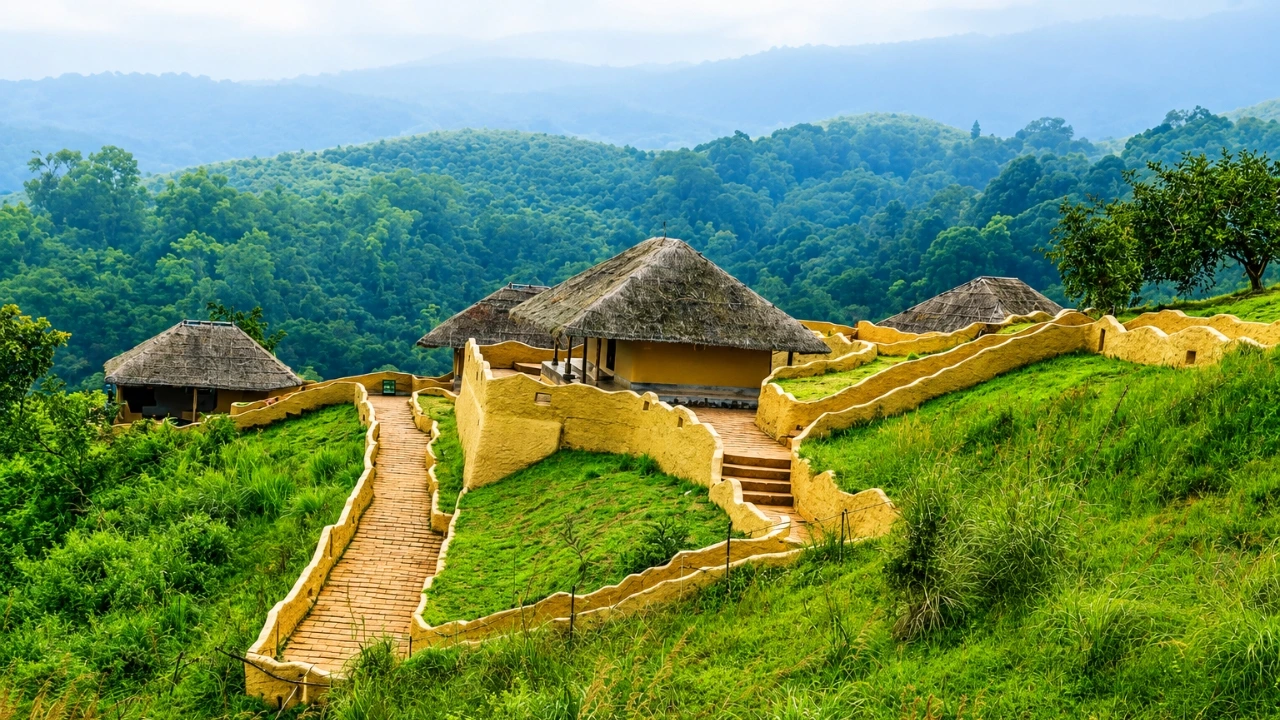
When planning an itinerary for Wayanad, famous spots like Pookode Lake, Chembra Peak, and Edakkal Caves usually come to mind. However, tucked away in the misty hills of the Vythiri region lies a destination that captures the true cultural soul of the area: En Ooru Wayanad.
Meaning “My Village” in Malayalam, En Ooru is Kerala’s very first tribal heritage village. Spread across approximately 25 acres of scenic hillside terrain, this unique cultural tourism initiative was developed jointly by the Kerala Tourism Department and the Department of Scheduled Tribe Development.
Unlike conventional museums, where history sits behind glass, En Ooru is designed as a living cultural space. Managed directly by local indigenous communities, it allows visitors to experience tribal heritage through traditional architecture, live performances, ethnic cuisine, and artisan markets.
En Ooru Wayanad Entry Fee, Timings & Quick Facts
Category / Service | Charges & Details |
Adult Ticket | ₹50 |
Child Ticket (5–10 years) | ₹20 |
Children Below 5 Years | Free |
Mandatory Jeep Shuttle | ₹40 per person (Round trip) |
Digital Camera Fee | ₹150 |
Opening Hours: 9:00 AM to 5:00 PM (Weekdays) | 9:00 AM to 6:00 PM (Weekends & Public Holidays).
Critical Cutoff: The ticket counter closes strictly at 4:30 PM.
En Ooru Closing Day: The village is open every day of the week, including Mondays.
Online Booking Note: Visitors are advised to check the official En Ooru website for the latest booking options, online ticketing updates, and availability before traveling.
How to Reach En Ooru & The Shuttle System
En Ooru is situated near Pookode in the Vythiri region, right off the Kozhikode–Wayanad National Highway (NH 766).
- Nearest Towns: Vythiri (8 km) | Kalpetta (15 km) | Sulthan Bathery (35 km).
- Arriving by Public/Private Transport: Private vehicles are not permitted to drive up to the heritage village. You must park your vehicle at the designated parking ground near the Kerala Veterinary and Animal Sciences University gate at Pookode.
- The Hilltop Jeep Ride: From the parking area, you must board an official shared Jeep shuttle to travel the remaining 2 km uphill to reach En Ooru.
⚠️ Traveler Tip: Shared Jeeps usually expect you to return down the hill with the same group. If you plan to spend extra time taking photos, eating, or shopping, explicitly communicate this to your driver before heading into the village to coordinate your return ride.
Tribal Communities & Sustainable Living
Wayanad’s forests have been protected for generations by its indigenous populations. En Ooru highlights the distinct customs, agricultural wisdom, and languages of various clans, including the Kurichya, Kuruma, Adiya, Paniya, Kattunayakan, Irular, Oorali, and Hill Pulaya.
The village offers firsthand insight into eco-friendly living frameworks that remain highly relevant to modern sustainability discussions:
- Traditional Architecture: A beautiful cluster of traditional huts constructed entirely from bamboo, mud, wood, and thatched grass—naturally insulated structures built to withstand the heavy terrain of the Western Ghats.
- Conservation & Medicine: Showcases of indigenous rainwater management, traditional farming methods, and deep-rooted tribal herbal medicine practices.
Top Experiences at the Heritage Village

1. Traditional Art, Music, and Dance
The open-air performance arena serves as the heartbeat of the village. Depending on the daily schedule and season, you can witness ancestral art forms passed down through generations, including Thudi Thalam (rhythmic drumming using the traditional Thudi instrument), Mavilan Pattu, and native folk dance rituals.
2. The Tribal Handicraft Market
The marketplace allows you to buy directly from native artisans, ensuring your purchases directly support the local economy.
- Top Buys: Unadulterated wild forest honey, hand-woven cane and bamboo baskets, traditional ornaments, herbal products, and native spices.
3. Authentic Ethnic Cuisine
The local food stalls serve unique dishes rooted in forest-gathering traditions and seasonal harvests. Instead of standard restaurant fare, look out for dishes featuring native millets, forest tubers, bamboo shoots, and wild leafy greens.
- Culinary Tip: If available during your visit, try Mulayari Payasam, a highly unique traditional sweet pudding made from bamboo seeds.
Nearby Attractions to Combine with En Ooru
Because a thorough exploration of En Ooru takes roughly 2 to 3 hours, it can easily be combined with other South and West Wayanad sights for a full-day trip:
- Pookode Lake (3.5 km away): A natural freshwater lake ideal for boating and quiet nature walks, located right down the road from the En Ooru parking lot.
- Lakkidi View Point (5 km away): Offers stunning, sweeping vistas of the famous 9-hairpin curve Wayanad Ghat Road.
- Chain Tree (4.5 km away): A quick, fascinating roadside monument tied to a famous local tribal legend.
- Karlad Lake (21 km away): A peaceful lake destination popular for kayaking, ziplining, and adventure activities.
- Banasura Sagar Dam (27 km away): India’s largest earthen dam, offering speedboat rides and beautiful mountain backdrops.
Frequently Asked Questions (FAQs)
Is En Ooru suitable for elderly travelers?
The village is situated on a sloped hillside. While the shuttle Jeep takes you to the entrance, exploring the village structures requires walking uphill on paved pathways. Elderly travelers or those with mobility issues may need to take frequent breaks.
What are the guidelines regarding plastics and environmental waste?
Visitors are strongly encouraged to avoid single-use plastics and follow eco-friendly guidelines inside the heritage village. Smoking, alcohol, and littering are strictly prohibited to maintain the sanctity of the cultural space.
What is the best season to visit?
October to February offers beautiful, crisp, and comfortable weather for walking. However, the monsoon season (June to September) transforms the surrounding hills into a lush green paradise, provided you don’t mind carrying an umbrella for sudden downpours.
Final Thoughts
En Ooru Wayanad isn’t just another viewpoint to check off a bucket list; it is a meaningful journey into the history and living traditions of Kerala’s indigenous communities. By visiting the marketplace, trying the traditional food, and respecting the heritage space, you actively contribute to community-based, responsible tourism that keeps these vital cultural roots alive.


