
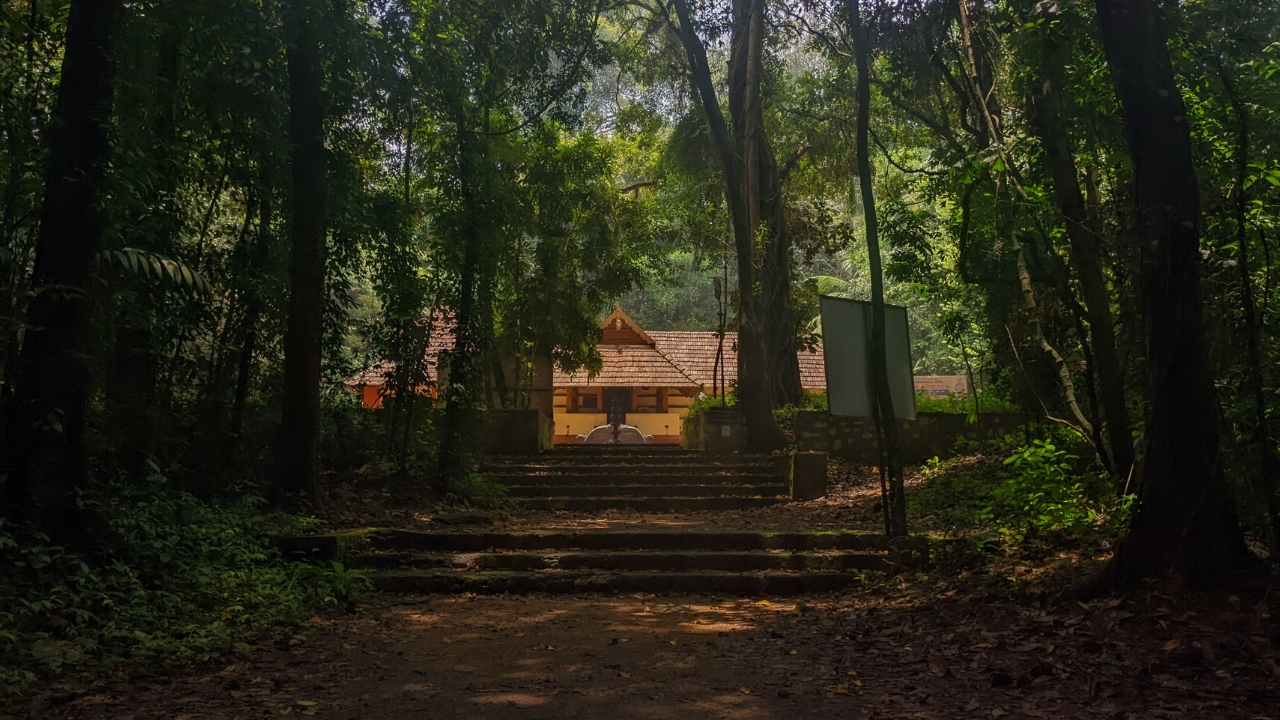
Kerala’s natural heritage extends beyond its hill stations, wildlife sanctuaries and protected forests. Across the state, small patches of trees and natural vegetation have been preserved for generations because of their religious and cultural significance. Known as kaavukal (sacred groves), these spaces represent a longstanding relationship between local communities, traditional beliefs and the natural environment.
Many sacred groves are associated with serpent worship and local deities. Within these spaces, trees, plants and other forms of life are traditionally treated with respect. Certain activities, such as cutting trees or disturbing the vegetation, may be restricted according to local customs.
Although some groves occupy only a small area, their importance goes beyond their size. They preserve traditional worship practices, provide habitats for wildlife and reflect how communities have protected parts of their natural surroundings over generations.
For travellers seeking a different side of Kerala, sacred groves offer a chance to explore the state’s cultural heritage alongside its natural landscapes. From the well-known serpent-worship traditions of Mannarasala to the forest setting of Iringole Kavu, each place has its own identity and story.
Understanding the Tradition of Sacred Groves in Kerala
The Malayalam word kaavu refers to a sacred grove traditionally associated with a deity or religious practice. These spaces can be found near ancestral homes, temples and village settlements. Some are maintained by individual families, while others are protected through community participation.
Unlike landscaped gardens, traditional sacred groves often retain a relatively natural appearance. Mature trees, shrubs, climbers, fallen leaves and small water bodies may form part of their surroundings. In many places, traditional beliefs discourage activities that could disturb the vegetation or alter the natural environment.
The size and character of these groves vary considerably. Some are small patches of vegetation within residential areas, while others cover larger stretches of land. Their religious significance also differs according to the local community and traditions.
One of the most recognised traditions associated with Kerala’s sacred groves is serpent worship. However, not every kaavu is a sarpa kavu. Many are connected with Bhagavathi and other local deities, each having its own rituals and cultural practices.
Serpent Worship and Other Traditions Associated with Kaavukal

Sarpa Kavus: Sacred Spaces of Serpent Worship
Serpent worship has a significant place in Kerala’s traditional religious practices. A sarpa kavu is a sacred grove associated with serpent deities, often represented by stone images placed beneath trees or within a designated worship area.
Families and communities may conduct rituals and offerings at these sites, following customs passed down through generations. In some traditions, protecting the grove is closely connected with the belief that disturbing its natural surroundings could have spiritual consequences.
The combination of serpent images, mature trees and natural vegetation gives these places a distinctive cultural identity. Mannarasala in Alappuzha is among the best-known examples of this tradition.
Groves Dedicated to Local Deities
Not all sacred groves in Kerala are associated with serpent worship. Many are dedicated to local goddesses and village deities, with traditions that differ between regions.
In northern Kerala, certain sacred spaces are also connected with Theyyam, a ritual performance tradition deeply rooted in the cultural life of the region. Through elaborate costumes, music and ritual practices, performers embody local deities and figures associated with regional beliefs.
These traditions demonstrate that Kerala’s sacred groves are not a single, uniform cultural practice. Each location has its own history, religious identity and relationship with the surrounding community.
Sacred Groves to Explore in Kerala
Sacred groves can be found across different districts of Kerala. Some are recognised religious destinations, while others are primarily community-protected spaces with limited visitor access.
The following places offer an introduction to the different cultural and natural traditions associated with Kerala’s kaavukal.
1. Mannarasala, Alappuzha
Mannarasala Sree Nagaraja Temple, located near Haripad in Alappuzha district, is one of Kerala’s most recognised centres of serpent worship. Its association with the sarpa kavu tradition makes it an important place for understanding the religious significance of sacred groves in the state.
The temple is known for its serpent deities and the distinctive role of the family responsible for its traditional worship. Mannarasala Amma, the senior female member of the family, holds an important position in the temple’s religious traditions.
The serpent images and surrounding trees form part of the sacred setting. For visitors, Mannarasala offers an opportunity to understand how family traditions, religious practices and the protection of natural surroundings are connected.
It is also an established pilgrimage destination, attracting devotees from different parts of Kerala and beyond. Visitors should respect the temple’s customs and follow its rules regarding photography and access to worship areas.
2. Iringole Kavu, Ernakulam
Located near Perumbavoor in Ernakulam district, Iringole Kavu is a well-known sacred grove associated with Goddess Bhagavathy. The temple is surrounded by dense vegetation, creating a distinctive forest setting within a developed part of central Kerala.
Large trees, natural pathways and thick vegetation contribute to the character of the grove. Unlike a conventional temple compound, the natural surroundings are an important part of its identity.
Iringole Kavu is also known for its ecological significance. Its vegetation provides habitat for different forms of plant and animal life, making it an interesting example of how traditional worship spaces can help preserve natural environments.
Visitors can explore the temple surroundings while respecting local customs. It is important to remain on permitted pathways and avoid disturbing the vegetation.
3. Neeliyar Kottam, Kannur
Neeliyar Kottam in Kannur represents another aspect of Kerala’s sacred-grove traditions. Its cultural identity is associated with Neeli, a local goddess, and the Theyyam tradition.
Theyyam is a ritual performance tradition particularly associated with northern Kerala. It combines elaborate costumes, music, movements and religious practices to represent local deities and traditional figures.
At Neeliyar Kottam, the relationship between ritual performance and the sacred landscape is an important part of its cultural significance. It demonstrates how some groves are maintained not only as places of worship but also as spaces connected with local identity and traditional performance.
Travellers interested in witnessing Theyyam should remember that performances take place according to local ritual calendars. It is best to check the schedule before planning a visit.
4. Kammadam Kavu, Kasaragod
Kammadam Kavu in Kasaragod is another example of the relationship between sacred-grove traditions and the natural landscape of northern Kerala.
The grove is associated with local worship and ritual practices, including Theyyam traditions. These activities form part of the community’s relationship with the sacred space and its surroundings.
Kammadam Kavu is particularly interesting from a conservation perspective. Traditional beliefs and community practices have played a role in protecting its natural environment, demonstrating how cultural traditions can contribute to the preservation of vegetation and wildlife habitats.
For travellers interested in exploring such places, it is important to understand that sacred groves are primarily religious and community spaces. Visitor access and opportunities to observe rituals depend on local arrangements.
5. Poyil Kavu, Kozhikode
Poyil Kavu in Kozhikode is another example of a sacred grove associated with Kerala’s traditional worship practices and natural heritage.
The grove is also of interest from an ecological perspective. Research involving Poyil Kavu has examined the diversity of soil fungi found within sacred-grove environments. These organisms play important roles in natural processes such as decomposition and nutrient cycling.
Although such ecological features may not be immediately visible to visitors, they help explain why preserving these natural spaces is important.
Poyil Kavu offers another perspective on Kerala’s sacred-grove tradition, showing that the value of a kaavu extends beyond its visible vegetation and religious structures.
Why Sacred Groves Are Important for Kerala's Biodiversity
The cultural significance of sacred groves is closely connected with their ecological value. Traditional beliefs and community practices have helped preserve natural vegetation in many locations where surrounding landscapes have gradually changed.
Although individual groves differ in size and condition, they can provide important habitats within areas affected by construction, agriculture and other forms of land-use change.
Small Habitats for Birds and Wildlife
The vegetation within sacred groves can provide shelter, nesting areas and feeding opportunities for different forms of wildlife. Depending on their location, these spaces may support birds, butterflies, insects, reptiles and amphibians.
Studies of sacred groves in northern Kerala have recorded a variety of bird species, including birds associated with the Western Ghats. The diversity found in these areas demonstrates how even relatively small natural spaces can contribute to local biodiversity.
Their importance becomes particularly clear in developed landscapes where larger stretches of natural vegetation have become fragmented.
Preserving Native Plants and Trees
Some sacred groves retain mature trees and native plant species that are less common in surrounding developed areas. Their vegetation may include large trees, medicinal plants, climbers and other species associated with the natural landscape of the region.
Iringole Kavu, for example, is known for its diverse vegetation and natural forest surroundings. Such groves help preserve plant communities that may otherwise face pressure from changes in land use.
The ecological character of each grove depends on its location, size and surrounding environment. A sacred grove in the lowlands may have a different range of vegetation from one in the northern parts of Kerala.
Protecting Soil and Less Visible Life
The ecological importance of a sacred grove extends beyond the trees and animals that visitors can easily see.
The soil beneath the vegetation contains communities of fungi and microorganisms that contribute to decomposition and nutrient cycling. Fallen leaves and other organic matter become part of this natural process, supporting the wider ecosystem.
Research involving selected sacred groves in Kerala has highlighted the diversity of soil fungi found in these environments. This is another reason why protecting the natural condition of a grove matters.
Challenges Facing Kerala's Sacred Groves
Despite their cultural and ecological importance, many sacred groves face challenges as settlements and land-use patterns change.
Urban development and land fragmentation: Construction and changes in property use can reduce the area of natural vegetation surrounding a grove. Smaller and isolated patches may become more vulnerable to environmental changes.
Changing traditional practices: In some communities, the customs that once helped protect sacred groves are becoming less widely followed. When traditional management practices weaken, the natural surroundings may also face greater pressure.
Loss of native vegetation: The removal of older trees, introduction of non-native plants and changes to natural undergrowth can affect the ecological character of a grove.
Pressure on natural resources: Disturbance, waste disposal and changes to nearby water bodies can affect the quality of these habitats.
Conservation requires more than protecting the visible trees. It also involves supporting local communities, understanding traditional practices and recognising the ecological value of these spaces.
Can Travellers Visit Sacred Groves in Kerala?
Some sacred groves are associated with established temples and receive devotees and visitors, while others are located on private or community-managed land. Access conditions therefore vary from one place to another.
Mannarasala and Iringole Kavu are examples of places that visitors can explore in a religious and cultural context. However, not every sacred grove is a public sightseeing destination.
If you are planning to explore one, keep a few things in mind:
- Check access arrangements: Confirm whether visitors are permitted and whether any areas are restricted.
- Follow temple customs: Rules regarding footwear, dress, photography and entry may differ between locations.
- Stay on designated pathways: Avoid walking through protected vegetation or disturbing worship areas.
- Respect rituals and performances: Do not interrupt ceremonies or assume that photography is permitted.
- Avoid littering: Carry back plastic, food packaging and other waste.
- Ask before taking photographs: Seek permission before photographing people, ritual activities or restricted areas.
The purpose of visiting a sacred grove should not be limited to photographing an unusual patch of forest. Understanding its importance to the local community is an equally valuable part of the experience.
Experience a Different Side of Kerala's Heritage
Kerala’s sacred groves offer a perspective on the state that goes beyond its familiar tourist landscapes. They show how religious beliefs, community traditions and environmental protection have influenced one another over generations.
From the serpent worship traditions of Mannarasala to the forest surroundings of Iringole Kavu and the ritual culture of northern Kerala, each grove has its own story. Their ecological importance adds another dimension, reminding us that even small patches of vegetation can support valuable forms of life.
For travellers interested in Kerala’s cultural and natural heritage, exploring these places can provide a deeper understanding of the communities and traditions that have shaped the landscape. Protecting them for future generations means preserving not only their natural surroundings but also the cultural practices that have helped these spaces survive.


