

Kerala’s coastline and network of rivers and backwaters have shaped the lives of fishing communities for generations. Fishing supports local livelihoods, supplies fresh seafood to markets and plays an important role in the state’s food culture.
For travellers, these communities offer a different perspective on Kerala. Beyond the beaches and houseboat cruises, visitors can discover traditional fishing methods, observe activity along the waterfront and learn how coastal and backwater communities depend on the water.
From the famous Chinese fishing nets of Fort Kochi to the village experiences of Kumbalangi, Kerala’s fishing traditions offer an interesting way to explore the state’s everyday life and cultural heritage.
Traditional Fishing Techniques in Kerala
Fishing methods in Kerala vary according to the environment. Coastal fishermen work in the Arabian Sea, while communities around rivers and backwaters use techniques suited to shallower, sheltered waters. Some methods rely on large nets and teamwork, while others require little more than a cast net or fishing line.
1. Chinese Fishing Nets in Fort Kochi

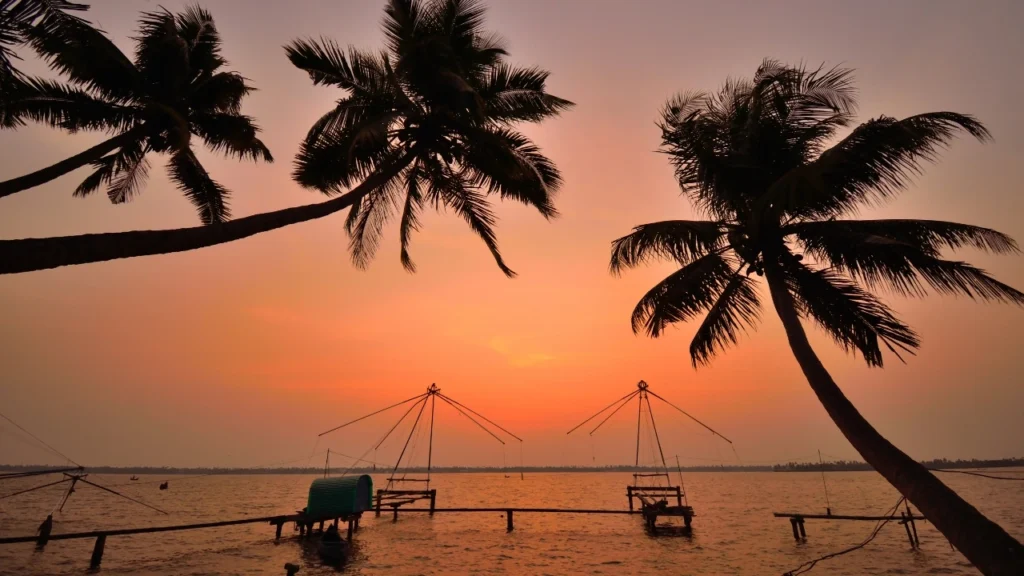
Chinese fishing nets, locally known as Cheena vala, are among the most recognisable sights along the Fort Kochi waterfront. These large, shore-operated structures use wooden beams, ropes and stone counterweights to lower a net into the water and raise it again.
Operating a net requires coordination between several fishermen. The counterweight system helps balance the structure, making it possible to raise the net after it has remained in the water for a short period.
Their exact historical origins are uncertain, although they are traditionally associated with Chinese maritime contacts and are believed to have reached Kochi centuries ago. Today, they remain an important symbol of the city’s coastal heritage.
Where to see them: Visit the waterfront near Vasco da Gama Square in Fort Kochi. Early morning is a good time to look for fishing activity, while the nets also make a distinctive sight against the evening sky. Actual operations depend on conditions and the activity of local fishermen.
2. Cast-Net Fishing
Cast-net fishing is a traditional technique used in parts of Kerala’s coastal and inland waters. A fisherman throws a circular net so that it spreads across the water before sinking. The weighted edges help enclose fish underneath, allowing the net to be pulled back.
Although the method may look simple, spreading the net evenly takes practice and good timing. It is particularly interesting to observe in backwater settings, where fishing takes place alongside everyday village activities.
Where to learn about it: Kumbalangi, near Kochi, offers village tourism experiences involving traditional fishing methods, including cast-net fishing. Travellers should check which activities are available through local hosts before visiting.
3. Hook-and-Line Fishing
Hook-and-line fishing uses baited hooks attached to fishing lines. Depending on the location and target fish, the line may be cast from the shore, used from a boat or lowered into suitable inland waters.
The technique requires patience and an understanding of local conditions. It is also a useful example of how fishing methods can be adapted to different waterways without relying on large nets.
Visitors interested in trying this method can enquire about angling experiences in destinations such as Kumbalangi and Kumarakom. Availability depends on the host and the arrangements offered.
4. Shore-Seine Fishing
Shore-seine fishing uses a large net that is set in shallow coastal waters and pulled towards the shore. The process often involves several people working together to handle the net and bring in the catch.
Unlike a cast net, which is thrown by an individual fisherman, a shore seine requires more equipment and coordinated effort. The method illustrates the importance of teamwork in traditional fishing communities.
The technique is not practised in the same way at every beach, and visitors should not expect to see it during every coastal visit.
Coastal Life in Kerala

Fishing communities are an important part of life along Kerala’s coast. Daily routines can depend on weather, sea conditions, fishing schedules and the arrival of boats at landing centres.
At active fishing harbours, the work continues after the catch is brought ashore. Fish may be sorted, weighed, sold to traders or transported to markets. Other livelihoods support the industry, including net making, boat maintenance, fish trading and processing.
Fishing also has a close connection with Kerala’s food culture. The seafood served in homes and local restaurants often reflects the catch available in the surrounding waters. Fish curries, fried fish and regional seafood preparations vary according to local ingredients and family traditions.
For visitors, observing these activities can provide a better understanding of how fishing supports coastal communities beyond the act of catching fish itself.
Places to Explore Kerala's Fishing Traditions
Several destinations offer opportunities to learn about fishing culture, but each provides a different experience. Some are best known for their waterfront views, while others offer organised village activities.
Fort Kochi
Fort Kochi is the most familiar starting point for travellers interested in traditional fishing nets. The Chinese fishing nets along the waterfront combine a working fishing technique with the historic character of the neighbourhood.
Visitors can watch from the public waterfront and combine the stop with a walk through Fort Kochi’s heritage streets, nearby attractions and local food spots. If you want to see the nets being operated, allow time rather than assuming they will be working continuously.
Kumbalangi
Kumbalangi is a village near Kochi known for its backwater setting and village tourism experiences. Its tourism activities include traditional fishing, Chinese-net fishing, cast-net fishing and angling, although the precise options depend on the arrangements available locally.
The village offers a chance to learn about fishing as part of everyday life rather than seeing it only as a waterfront attraction. Some experiences may also include nature walks, traditional meals and local craft activities.
If you would like to participate in a fishing activity, contact a local host or experience provider in advance to confirm what is offered and whether any additional charges apply.
Kumarakom
Kumarakom is known for its location beside Vembanad Lake and the surrounding backwaters. Fishing is part of the area’s local economy, alongside farming and tourism.
Travellers staying in Kumarakom can enquire about traditional fishing experiences, including net fishing or angling where these are offered. The availability of particular methods depends on the provider and local conditions, so confirm the details before booking.
A visit to Kumarakom can also be combined with a backwater cruise or a stay at a local homestay, giving visitors a broader view of life around the lake.
How to Experience Fishing Culture Responsibly
Fishing areas are working environments, and visitors should respect the people who depend on them for their livelihoods. A few simple precautions can help make the experience enjoyable for both travellers and local communities.
- Ask before taking photographs. Seek permission before taking close-up pictures of fishermen, their families or their work.
- Keep clear of working equipment. Nets, ropes, boats and waterfront platforms can be hazardous, especially when wet.
- Choose locally arranged experiences. A local host can explain the method, the community’s practices and the activities visitors are permitted to join.
- Confirm arrangements beforehand. Not every fishing village offers demonstrations or visitor participation every day.
- Follow local instructions. Do not handle fishing gear or enter restricted areas without permission.
Respecting these boundaries helps preserve the character of fishing villages and avoids disrupting people’s work.
Best Time to Explore Kerala's Fishing Villages
Fishing takes place throughout the year, but the methods used and the activities visitors can observe may change with weather, sea conditions and seasonal fishing restrictions.
For general sightseeing, October to March is often a comfortable period to explore Kerala’s coastal and backwater destinations. However, pleasant weather does not guarantee that a particular fishing technique will be operating.
If your main interest is watching a specific method or joining a local activity, check with the destination or host before travelling. This is especially important during periods of rough sea conditions or when local fishing restrictions are in effect.
Frequently Asked Questions
What are the traditional fishing techniques used in Kerala?
Traditional methods include Chinese fishing nets, cast nets, hook-and-line fishing and shore seines. The techniques used vary according to whether fishing takes place in coastal waters, rivers or backwaters.
Where can I see Chinese fishing nets in Kerala?
Fort Kochi is the best-known destination for Chinese fishing nets. They can be seen along the waterfront near Vasco da Gama Square. Kumbalangi also has Chinese fishing nets in its backwater setting.
Can tourists try traditional fishing in Kerala?
Some village tourism experiences offer opportunities to learn about or participate in fishing activities. Kumbalangi is one option to investigate, but travellers should confirm the activity, availability and cost with a local host beforehand.
Is fishing part of Kerala’s cultural heritage?
Yes. Fishing has long supported coastal and backwater communities through food production, trade and related livelihoods. Traditional methods, local markets and seafood cuisine all form part of this connection between people and water.
Discover Kerala Beyond Its Popular Attractions
Kerala’s traditional fishing techniques offer more than an interesting sight. They reveal the skills, livelihoods and local knowledge that have shaped life along the coast and backwaters for generations.
Watch the Chinese fishing nets in Fort Kochi, explore village experiences in Kumbalangi or learn about fishing around Kumarakom. Each destination offers a different perspective on Kerala’s relationship with water.
When planning your trip, consider adding a coastal or backwater village to your itinerary. Explore Kerala with KeralaPackageTours.com and discover the traditions and everyday experiences that make the state distinctive.


