
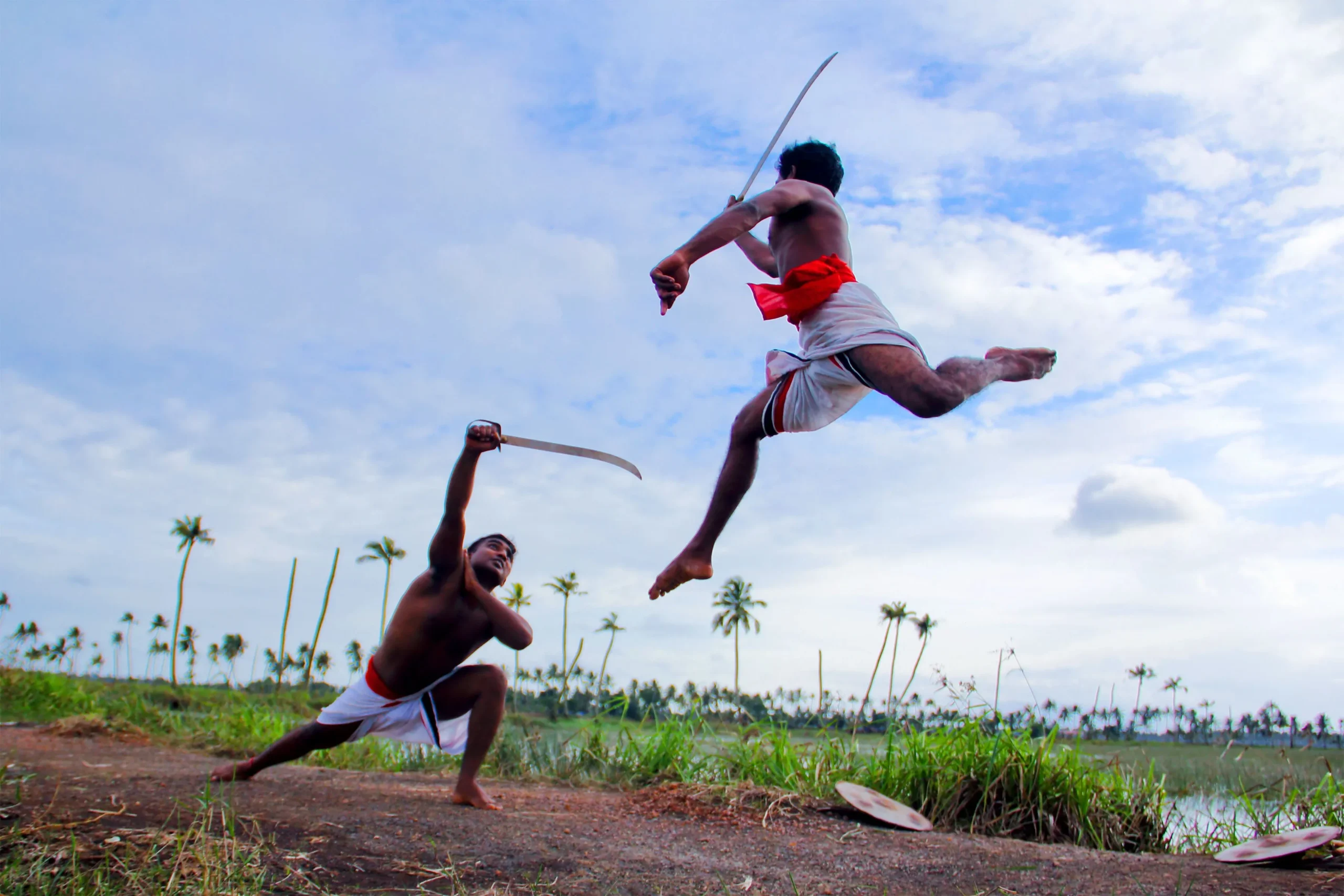
Kerala is known for its backwaters, hill stations, festivals and traditional art forms. Among its cultural treasures is Kalaripayattu, a traditional martial art that combines physical strength, flexibility, discipline and skill.
Practised in dedicated training spaces called kalaris, this martial art has been passed down through generations. Its movements, traditional weapons and training methods reflect a part of Kerala’s cultural heritage that continues to attract interest today.
For travellers, watching a Kalaripayattu performance offers a chance to discover something different from the usual sightseeing experiences. But the art is more than an impressive display of movements. It has a long association with Kerala’s history, and its techniques continue to be taught by experienced practitioners.
If you’re planning a trip to Kerala, here’s what you should know about Kalaripayattu, how it is practised and where you may be able to experience it.
What Is Kalaripayattu?
Kalaripayattu is a traditional martial art associated with Kerala. The word kalari refers to a training ground, while payattu relates to fighting or physical practice.
Training takes place under the guidance of a teacher, traditionally known as a Gurukkal. Students learn through regular practice, developing flexibility, balance, coordination and control before progressing to more advanced techniques.
Depending on the training centre, lessons may include body movements, footwork, wooden staffs and traditional weapons such as swords and shields.
Kalaripayattu is not practised in the same way everywhere. Different schools preserve their own teaching methods and traditions.
Today, some centres focus on regular martial arts training, while others offer demonstrations that introduce visitors to the art. Both provide ways to learn about this important part of Kerala’s cultural heritage.
A Brief History of Kalaripayattu
Kalaripayattu has deep roots in Kerala’s martial traditions, although its exact origins are difficult to establish.
Traditional stories connect the art with Kerala’s legendary past, while historical accounts associate martial training with warrior communities and earlier systems of combat and defence.
In earlier times, martial skills had an important place in society. Over the centuries, changes in warfare and modern military systems affected the role of traditional combat training.
However, Kalaripayattu continued through the efforts of teachers and practitioners who preserved its techniques and passed them on to new generations.
Today, it is practised as a martial art and introduced to wider audiences through cultural demonstrations. This continued practice helps keep the tradition alive while allowing new generations to learn about its history.
How Is Kalaripayattu Practised?

Kalaripayattu training combines physical preparation with the gradual development of martial skills. The exact methods vary by school and instructor, but several elements are commonly associated with the practice.
Body Movements and Flexibility
Training often begins with exercises that improve balance, flexibility, strength and coordination. Students practise controlled movements and footwork, building the physical foundation needed for more advanced techniques.
These exercises require patience and repetition. What looks effortless when performed by an experienced practitioner usually comes from years of practice.
Training With Wooden Staffs
Wooden staffs are among the best-known training weapons associated with Kalaripayattu.
Students learn how to control the staff, coordinate their movements and maintain appropriate distance. During demonstrations, these techniques can be particularly engaging because they show the speed and precision required in martial arts practice.
Traditional Weapons
More advanced training may include weapons such as swords and shields. These techniques require considerable control and are taught under an instructor’s supervision.
Not every school teaches the same weapons or follows the same training sequence. Visitors watching a demonstration should therefore understand that they are seeing one school’s approach rather than the complete range of Kalaripayattu traditions.
Unarmed Techniques
Kalaripayattu also includes techniques performed without weapons. These involve coordinated body movements, defensive actions and an understanding of timing and distance.
Together, these different elements make Kalaripayattu a physically demanding discipline that requires regular training.
Where Can You Experience Kalaripayattu in Kerala?
Travellers may be able to watch Kalaripayattu demonstrations at established training centres and cultural venues in Kerala. Availability varies, so it is best to confirm the schedule before visiting.
1. Thiruvananthapuram
Kerala’s capital is a useful place to begin exploring the state’s cultural traditions. The city is home to established Kalaripayattu institutions, including C. V. N. Kalari.
Visitors interested in the martial art can enquire about opportunities to observe training or attend a demonstration.
If you’re already exploring Thiruvananthapuram‘s museums, historic areas and other attractions, a Kalaripayattu experience can add a different dimension to your itinerary.
Travel tip: Contact the centre in advance to check visitor access, timings and whether a demonstration is available on your travel dates.
2. Kozhikode
Kozhikode, in northern Kerala, has a strong cultural identity and several institutions associated with traditional martial arts.
Visitors interested in Kalaripayattu can look for established training centres and ask whether they offer demonstrations or introductory sessions.
A visit can also fit into a wider trip exploring Kozhikode’s historic trading connections, local food and coastal surroundings.
Travel tip: Check whether the programme is a regular training session or a performance arranged for visitors, as the experience may differ.
3. Kottayam
Kottayam is another place to investigate if you’re interested in traditional martial arts. Training institutions such as Sri Rudra C. V. N. Kalari are associated with Kalaripayattu.
Depending on the centre’s current arrangements, visitors may be able to enquire about demonstrations or introductory training.
The location can also suit travellers exploring nearby destinations such as Kumarakom and Vagamon.
Travel tip: Confirm availability directly with the centre before planning your visit around a performance.
4. Thekkady
Thekkady is best known for its forest landscapes, spice plantations and nature-based experiences. Visitors may also find Kalaripayattu performances offered as part of cultural programmes in the area.
These demonstrations provide an accessible introduction to the martial art, often showcasing coordinated movements and traditional weapon techniques.
For travellers staying in Thekkady, a performance can be a useful addition to an itinerary that already includes outdoor activities.
Travel tip: Check the venue, show timings, duration and ticket price before booking. Performance schedules can change.
These locations are starting points for planning a visit. Confirm the current availability of public demonstrations or training sessions directly with the relevant centre.
What Can You Expect From a Kalaripayattu Performance?
A Kalaripayattu demonstration gives visitors an introduction to the movements and techniques of the martial art.
Depending on the programme, you may see physical exercises, coordinated movement sequences, wooden staff techniques and demonstrations involving traditional weapons.
Some performances also include explanations of the art’s history and training methods, helping visitors understand what they are watching.
Although the movements can be fast and dramatic, Kalaripayattu requires more than physical strength. Balance, timing, concentration and control are important parts of the practice.
A demonstration offers only a glimpse of this training. The techniques performed by experienced practitioners are developed through regular practice over many years.
Can Beginners Learn Kalaripayattu?
Yes. Some training centres offer introductory classes for beginners, including visitors who want to experience the martial art during a trip to Kerala.
A beginner session may introduce basic movements, flexibility exercises and simple techniques under an instructor’s supervision.
Before booking, ask about the session’s duration, physical requirements, suitable clothing and safety arrangements. If you’re interested in a longer course, check whether the centre accepts short-term students.
Kalaripayattu involves physical activity, so beginners should work within their abilities and follow the instructor’s guidance. Advanced movements and weapon techniques should never be attempted without proper training.
Tips for Watching Kalaripayattu Respectfully
A few simple considerations can help you make the most of your visit.
- Book in advance: Confirm the schedule and availability before travelling to a training centre.
- Follow the instructor’s guidance: Training spaces have their own rules, and visitors should respect them.
- Ask before taking photographs: Some centres may restrict photography, particularly during regular classes.
- Don’t handle training weapons: These should only be used under appropriate supervision.
- Learn about the tradition: If explanations are available, take the opportunity to understand the movements and techniques rather than viewing the performance as entertainment alone.
Choosing an established centre and checking its arrangements beforehand can help you find an experience that suits your interests.
Discover Kerala's Martial Arts Heritage
Kalaripayattu offers a different way to understand Kerala’s cultural heritage. Its movements, training methods and traditional weapons reveal a martial art that has continued through generations of teachers and practitioners.
Whether you watch a demonstration in Thekkady, enquire about a training centre in Thiruvananthapuram or explore opportunities elsewhere in the state, the experience can add something distinctive to your Kerala holiday.
Beyond the beaches and backwaters, Kerala’s traditions offer another way to connect with the state and its history.


