
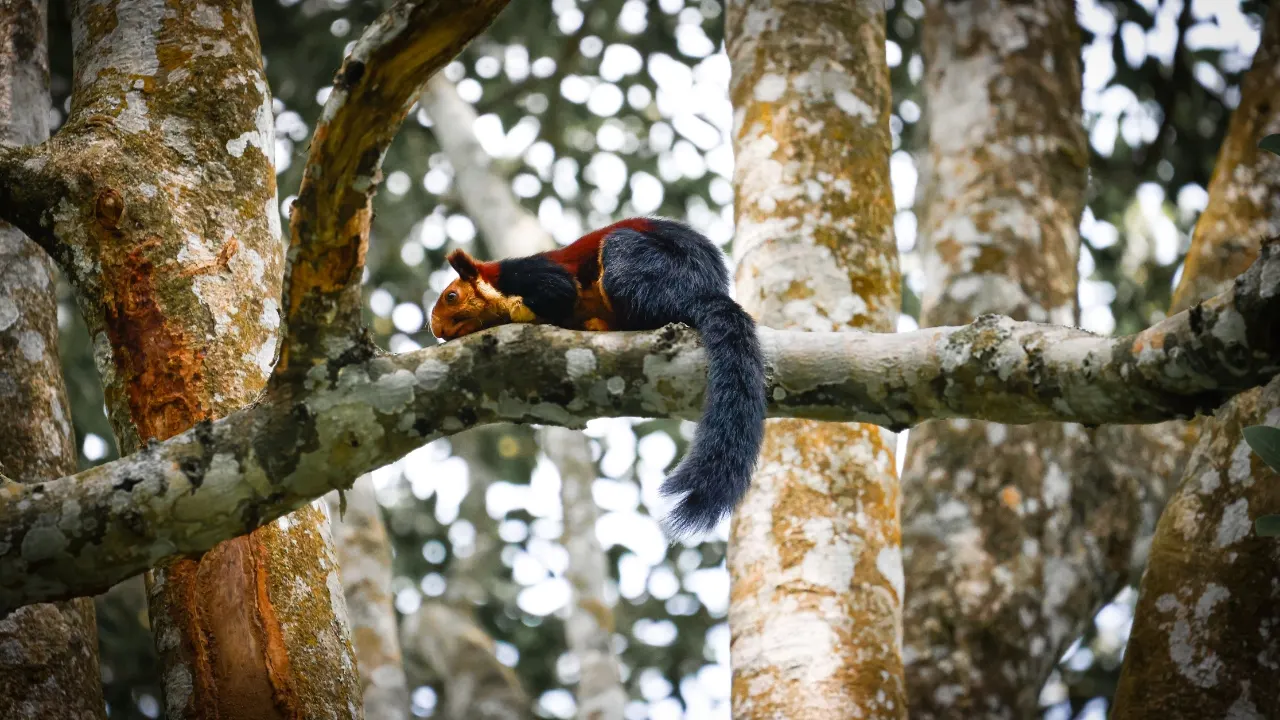
When people think of wildlife in Kerala, they usually picture elephants in the forest or tigers in the Western Ghats. But some of the state’s most memorable encounters involve smaller, rarer or easily missed animals: a lion-tailed macaque in the rainforest canopy, a Nilgiri tahr on a mountain slope, a Malabar grey hornbill at Thattekad, or an otter on a hill stream.
This guide covers eight wildlife experiences beyond the big animals, with where to go, when to go and what to check before you travel. Sightings are never guaranteed in any of these places, so plan around the habitat and the experience rather than a single animal.
1. Lion-Tailed Macaque: A Rainforest Primate
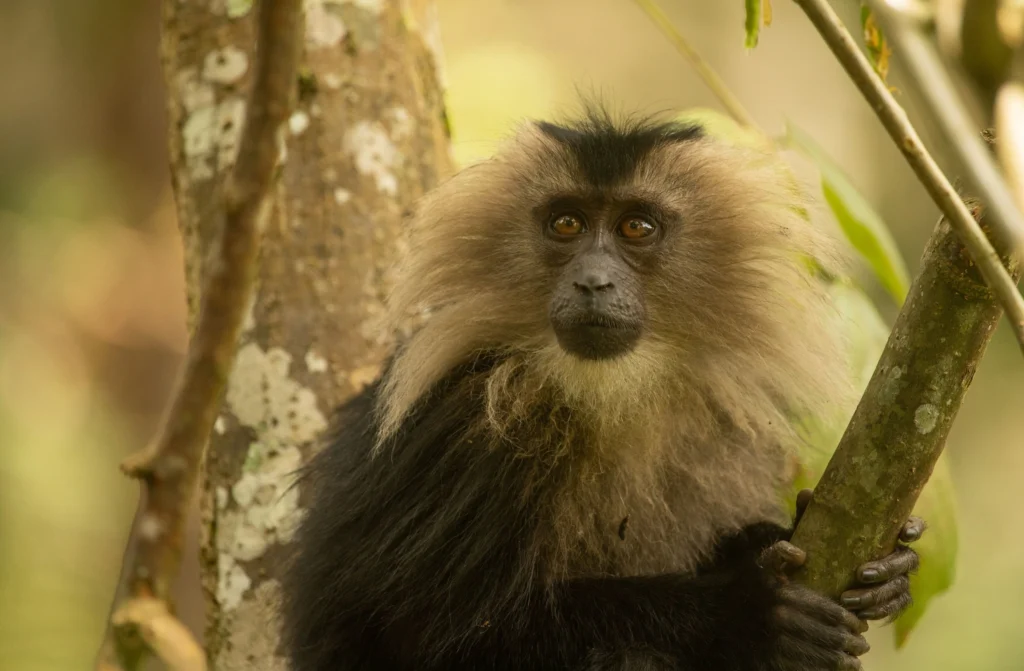
The lion-tailed macaque is one of the Western Ghats’ most distinctive primates. It has a dark coat, a pale mane of hair around the face and a tufted tail, and it is closely tied to mature evergreen forest.
Where to see it
Silent Valley National Park in Palakkad district is the best-known stronghold in Kerala, and it is reported to hold the largest known population of the species. The park lies within the Nilgiri Biosphere Reserve and was declared a national park in 1984. One popular story links the name “Silent Valley” to the macaque’s scientific name, Macaca silenus, though other explanations exist.
Good to know
- Access is controlled. Permission to enter is issued by the Wildlife Warden’s office at Mannarkad or the Assistant Wildlife Warden’s office at Mukkali, the park’s entry point.
- Visitors are generally taken as far as the Sairandhri forest station and watchtower, with entry in the morning hours.
- Sightings are never guaranteed. The animals spend much of their time high in the canopy, so listen for movement and calls.
- Seasonal access rules are reported differently by different sources, so confirm current opening periods with the forest office before you plan a trip.
2. Nilgiri Tahr: A Mountain Goat of the High Grasslands

The Nilgiri tahr is a mountain ungulate found only in the southern Western Ghats of Kerala and Tamil Nadu. It lives on steep grasslands and rocky slopes.
Where to see it
Eravikulam National Park near Munnar is home to the largest concentration of the species. The visitor area, Rajamala, offers open grassland, cliffs and mist-covered ridges that look nothing like Kerala’s lowland forests.
Good to know
- The park closes every year on 1 February and reopens on 1 April to protect the tahr during their calving season. Dates are set by annual notice, so check before booking.
- Tickets can be booked online through the official portal. Check current fees and timings, as they change.
- Stay on the designated visitor route and keep a safe distance from the animals.
3. Malabar Giant Squirrel: Look Up Into the Trees
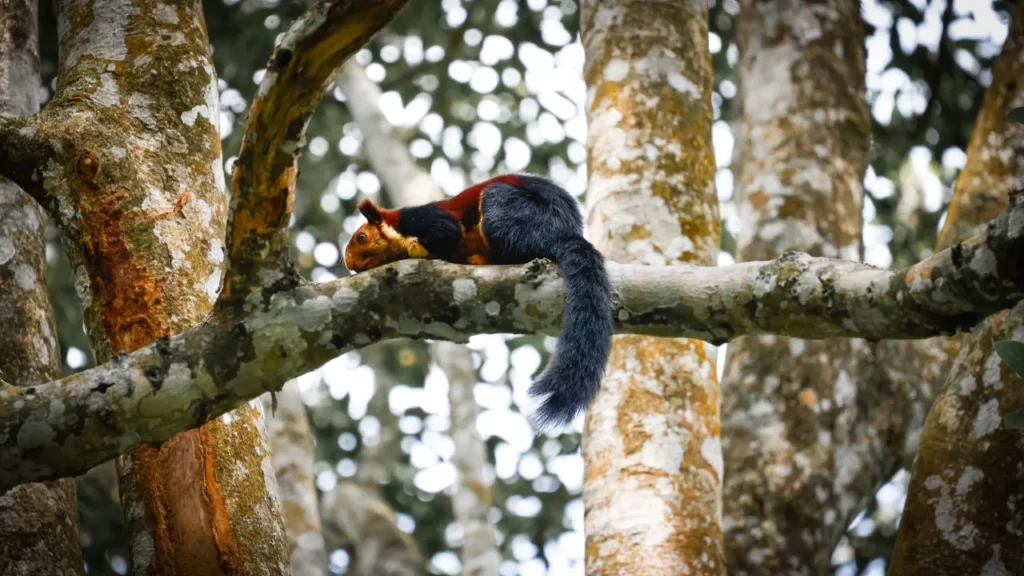
Not every memorable sighting happens on the forest floor. The Malabar giant squirrel, also called the Indian giant squirrel, lives high in the trees and is easy to miss unless you know to look up.
Where to see it
It occurs in forested areas across Kerala, including Silent Valley, where it appears in the park’s recorded wildlife.
Good to know
- Watch the canopy rather than the trail, and look for shaking branches.
- Early morning is usually the most active time.
- A slow forest walk with a local guide is more productive than a quick drive-through.
4. Hornbills: Listen for Wings Before You See Them
Kerala’s forests are home to several hornbill species. The great hornbill, with its large bill and casque, is also Kerala’s state bird. Hornbills play an important role in dispersing forest tree seeds.
Where to see them
Thattekad Bird Sanctuary on the Periyar River is the best-known birding site. It covers about 25 sq km and shelters around 300 bird species, mostly forest birds. Its signature hornbill is the Malabar grey hornbill, an endemic species. Great hornbills appear on local bird lists, but they are not a reliable draw here. Other Kerala forests can offer better chances of seeing the great hornbill.
Good to know
- Guided birdwatching and boat trips are arranged through the sanctuary’s reception office at the entrance.
- Binoculars matter more than an expensive camera.
- Early morning is generally more rewarding than midday.
5. Butterflies: A Small World in the Forest
The Western Ghats support remarkable butterfly diversity across forests, grasslands and wet areas. Kerala also has an official state butterfly, the Malabar banded peacock.
Where to see them
Thattekad, Munnar and Wayanad all offer opportunities, especially along forest edges, streams and flowering clearings.
Good to know
- A slow walk shows far more than a drive-through.
- Avoid touching butterflies or disturbing them for photographs.
6. Otters: Kerala's Elusive Waterway Wildlife
Three otter species are known from the Western Ghats: the Eurasian otter, the smooth-coated otter and the Asian small-clawed otter. Each prefers a different kind of water. The smooth-coated otter is found in larger water bodies, while the small-clawed otter prefers smaller hill streams at higher elevations.
Where to look
- Chinnar Wildlife Sanctuary: a rare photographic record of the Eurasian otter was made here, in a rocky, fast-flowing stream in the higher reaches.
- Periyar Tiger Reserve: Eurasian otters have been identified here from tracks and signs.
- Silent Valley: otters are listed among the park’s wildlife.
- Urban waterways: smooth-coated otters have also been reported in Kochi’s waters.
Good to know
- Otters are secretive and sightings are never guaranteed.
- A quiet canoe or small boat at dawn gives a better chance than a fast tourist boat.
- Watch from a distance and let the animals carry on undisturbed.
7. Reptiles and Amphibians: The Western Ghats' Hidden Wildlife
Many of Kerala’s most fascinating creatures are the easiest to overlook: frogs, snakes, lizards and other reptiles and amphibians, including species found nowhere else in the world.
When and how to look
The monsoon brings many frogs and other small animals into activity, and the forests are at their greenest. Heavy rain can affect trails and access, so check conditions and park restrictions first.
Good to know
- Go with a knowledgeable naturalist. They find far more than an unguided visitor.
- Never handle wild reptiles or amphibians.
- Ask the local forest office what walks are permitted, as some protected areas restrict certain activities.
8. Wetland Birds: Kingfishers, Herons and Migrants
Kerala’s wetlands support kingfishers, herons, egrets, darters, cormorants and, in season, migratory species.
Where to see them
Kumarakom Bird Sanctuary on the bank of Vembanad Lake in Kottayam is the best-known wetland site, and Thattekad adds forest and river birds. Houseboats and motorboats can be hired for bird-watching cruises around Kumarakom.
Good to know
- Migratory birds are generally seen from November to February.
- Resident birds, including breeding wetland birds, are best seen from June to August, according to Kerala Tourism.
- Dawn, roughly 6am to 8am, is the best time for sightings.
Where Should You Go? A Destination Guide
Destination | Wildlife experience | Best for | Check before you go |
Munnar / Eravikulam | Nilgiri tahr and mountain grassland | Mountain wildlife | Closed February and March |
Silent Valley | Lion-tailed macaque and rainforest | Serious nature lovers | Permission needed; confirm seasonal access |
Thattekad | Birds, Malabar grey hornbill, butterflies | Birdwatching | Book guides at the reception office |
Wetland and migratory birds | Birdwatching | Migrants: Nov–Feb; residents: Jun–Aug | |
Chinnar / Periyar | Otters and hill-stream wildlife | Patient wildlife watchers | Sightings rare; local guidance needed |
Wayanad | Forest wildlife and butterflies | Wildlife and nature | Confirm current entry rules |
Western Ghats forests | Reptiles and amphibians | Biodiversity enthusiasts | Best with a naturalist in the monsoon |
How to Watch Wildlife Responsibly
- Keep a safe distance and never feed or call animals.
- Stay on permitted trails and follow forest department instructions.
- Avoid flash photography and loud conversation in wildlife habitats.
- Never touch reptiles, amphibians or other wild animals.
- Take plastic and food waste back out with you.
- Use trained guides or naturalists where available.
Wildlife in Kerala Is Bigger Than a Safari
A tiger or elephant sighting can be unforgettable, but Kerala’s wildlife story is much wider. It includes a rare primate in an evergreen canopy, a tahr on a misty ridge, a hornbill crossing the sky and a frog calling from a wet forest floor. It also includes the rivers, wetlands and forests that make these encounters possible. Slow down, listen, look up and travel with local guidance. The most interesting wildlife is not always the largest.


