

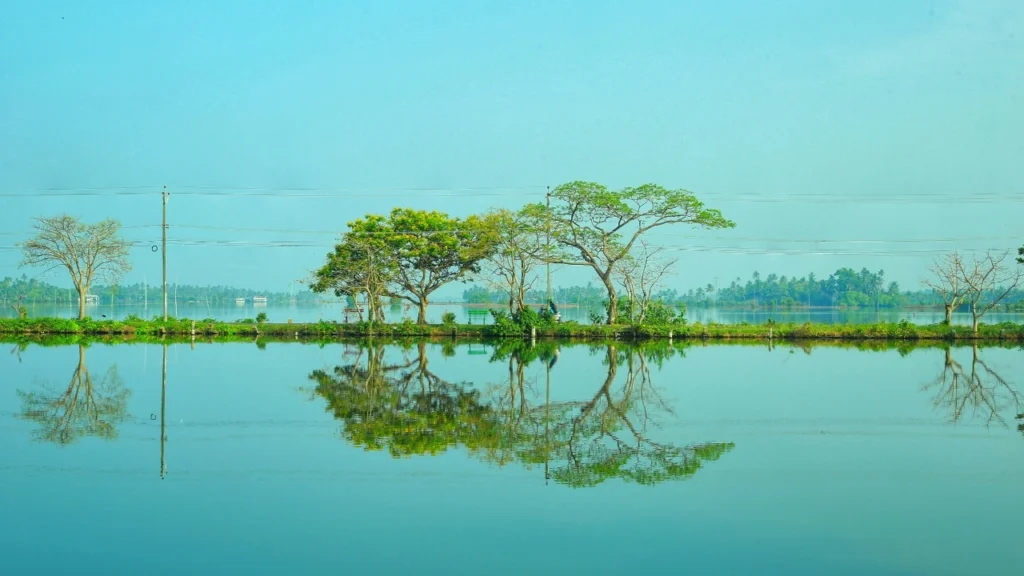
If you want to see the real Kerala – not just the postcard views – Kumbalangi is a wonderful place to start. Tucked away near Kochi in Ernakulam district, this quiet backwater village offers something most tourist spots cannot: an authentic, unhurried look at life along the Kerala backwaters.
Kumbalangi is a well‑known responsible tourism destination in Kerala. Unlike commercial tourist hubs, it was not built for visitors. Instead, the village invites you to step into its daily rhythm – fishing, crab farming, coir making, and simply living by the water.
For travellers looking for an offbeat escape near Kochi, Kumbalangi is worth every bit of attention.
Where is Kumbalangi, How to Reach
Kumbalangi lies about 12–14 kilometres from Kochi city, in Ernakulam district. It is a cluster of small islands surrounded by calm backwaters and mangrove ecosystems, connected by narrow roads and bridges.
- Nearest airport: Cochin International Airport (about 40 km)
- Nearest railway station: Ernakulam Junction (around 12 km)
- By road: Taxi, auto-rickshaw, or local bus from Kochi. The drive takes roughly 30–40 minutes.
The route itself is scenic – you cross small canals, pass coconut groves, and slowly leave behind city noise.
What Makes Kumbalangi Special
Unlike popular backwater destinations like Alleppey or Kumarakom, Kumbalangi has no luxury houseboats or large resorts. That is precisely its strength.
Here, village tourism works differently. Local families run homestays. Fishermen take visitors on their small boats. Farmers explain how crab and shrimp farming support the village. You are not a spectator – you become a temporary part of the community.
Kumbalangi is recognised under Kerala’s Responsible Tourism Mission. The focus is on preserving traditional livelihoods while allowing visitors to experience authentic local life.
Kumbalangi shows you a Kerala that is simple, hardworking, and deeply connected to nature.
Things to Do in Kumbalangi
Watch Traditional Fishing Up Close
Fishing is the heart of Kumbalangi. Walk along the backwater edges in the early morning, and you will see fishermen using cast nets, stake nets, and hand-pulled nets. Unlike the large Chinese fishing nets of Fort Kochi, the methods here are smaller in scale but just as fascinating.
During early morning walks, you might hear the soft splash of a net hitting the water and see silhouettes of fishermen pulling their catch. The air smells of salt, wet mud, and coconut husks. It is a sensory experience you do not get on a houseboat.
You can ask your homestay host to arrange a short fishing demonstration. Some families also offer crab farming tours, where you see how crabs are raised in enclosed backwater pens.
Kayak Through Mangroves
Kumbalangi’s calm waterways are perfect for kayaking. Unlike noisy motorboats, a kayak lets you glide silently through narrow mangrove channels. You paddle at your own pace, surrounded by coconut palms and the occasional kingfisher.
Daytime kayaking is peaceful and scenic. But there is another reason to get on the water after dark.
Bioluminescence – Kavaru (If You Are Lucky)
During certain summer periods, usually around March to May, the backwaters near Kumbalangi may display a natural phenomenon called bioluminescence. On dark, moonless nights, disturbed water sometimes glows with a faint electric blue light. Locally, it is known as Kavaru.
This is caused by tiny marine plankton. However, it is not guaranteed every year or every night. It depends on water conditions, temperature, and plankton concentration. Some seasons are better than others.
If conditions are favourable, local homestays or tour operators may arrange night kayaking trips to look for it. The Malayalam movie Kumbalangi Nights brought attention to this phenomenon. When you are lucky enough to see it, paddling through glowing water feels unforgettable. But it is always a matter of chance – part of the magic of nature.
Bioluminescence Viewing Guide | |
Possible season | March to May (not guaranteed) |
Best condition | Dark, moonless nights |
How to try | Ask your homestay about night kayaking tours |
Where | Backwaters around Kumbalangi and nearby Chellanam |
Take a Village Walk
Kumbalangi is best explored on foot. Follow the narrow lanes between coconut trees and small houses. You will see women weaving coconut leaves into baskets or mats (traditional coir making). Children playing by the water. Older men mending nets.
Photographers will find endless quiet moments to capture – a fishing boat resting on muddy banks, a row of coconut palms leaning over the water, or a village cat stretching on a sunlit porch.
Stay in a Homestay or a Small Resort
Kumbalangi offers two kinds of stays:
- Local homestays – Simple, warm, and immersive. You sleep in a family home, eat home-cooked meals, and learn about village life firsthand.
- Small resorts – For travellers who want more comfort without losing the backwater charm. A few boutique resorts and floating-stay properties are available alongside homestays. They offer private sit-outs, modern amenities, and direct water views while blending with the natural surroundings.
Both options let you wake up to the sound of water and birds.
Enjoy Authentic Kerala Seafood
Because fishing is a daily activity, the seafood here is exceptionally fresh. Do not leave without trying:
- Karimeen Pollichathu (pearl spot fish wrapped in banana leaf and grilled)
- Kerala-style fish curry (spicy and coconut-based)
- Prawn roast
- Crab preparations
The food is not fancy. It is honest, flavourful, and made with ingredients from the village itself. Eating a meal while looking out at the backwaters – that is a memory that stays with you.
Nearby Places You Can Combine
Kumbalangi works well as a half-day or one-night trip from Kochi. You can easily pair it with:
- Fort Kochi – colonial buildings, art cafes, and the famous Chinese fishing nets (about 20 minutes away)
- Mattancherry – the Dutch Palace and Jew Town
- Marine Drive, Kochi – for an evening walk along the waterfront
This makes Kumbalangi a perfect, peaceful break within a larger Kochi itinerary.
Best Time to Visit Kumbalangi
- October to March – Pleasant weather, ideal for daytime activities like kayaking, village walks, and canoe rides.
- March to May – The period when bioluminescence is most likely to occur (though never guaranteed). Nights are warmer, but the chance of glowing water makes it worth trying.
- June to September (monsoon) – Lush greenery and dramatic skies. Some boat activities may be limited, but the village looks stunning.
Try to visit during early morning or sunset – the light over the water is beautiful, and the village feels especially calm.
Travel Tips for Kumbalangi
- Wear comfortable clothes and footwear – you will be walking on uneven paths and near water.
- Carry insect repellent – especially if you visit in the evening or during the monsoon.
- Respect local life – ask before taking photos of people or their homes.
- Try a homestay even for one night – it makes all the difference.
- If hoping for bioluminescence, keep expectations realistic – it is a natural phenomenon, not a nightly show.
- Do not expect nightlife or luxury shopping – Kumbalangi is for slowing down.
Is Kumbalangi Suitable for You?
If you like… | Kumbalangi is a good fit? |
Quiet, rural experiences | ✅ Yes |
Cultural immersion | ✅ Yes |
Bioluminescence (if lucky) | ✅ Possible (March–May, not guaranteed) |
Eco-tourism and responsible travel | ✅ Yes |
Small resorts with comfort | ✅ Yes (limited options) |
Luxury houseboats | ❌ No (try Alleppey) |
Photography and nature walks | ✅ Yes |
Final Words
Kumbalangi will not give you a checklist of monuments or thrilling adventures. What it offers is rarer: a chance to breathe, to see how a small fishing community lives, and to feel what “peaceful” really means.
The soft lapping of water against a kayak. The smell of fresh karimeen roasting in a banana leaf. The sight of a fisherman casting his net at dawn. And on a lucky summer night, the possibility of paddling through water that glows blue with every stroke.
These are the moments that stay with you long after you leave.
For travellers who want to move beyond the usual Kerala tourist circuit, this village is a hidden gem – and one that deserves to stay that way.
If you are planning a Kerala trip and would like to include Kumbalangi in your itinerary, feel free to check our custom tour packages at keralapackagetours.com. We would be happy to help you build a journey that balances popular sights with quiet, meaningful experiences like this one.
Frequently Asked Questions
Is Kumbalangi worth visiting?
Absolutely. It is one of the most authentic village tourism experiences in Kerala, especially if you enjoy peaceful surroundings and local culture.
How far is Kumbalangi from Kochi?
About 12–14 kilometres – roughly 30 to 40 minutes by road.
Can I see bioluminescence in Kumbalangi?
Possibly. During March to May, under favourable conditions, bioluminescence may appear in nearby backwaters. It is not guaranteed every year or every night. Ask your homestay host about current conditions.
Is kayaking available?
Yes. Daytime kayaking through mangroves is popular. Some operators also offer night kayaking during the bioluminescence season, but success depends on nature.


